Verizon Express
Verizon’s first digital-only footprint.
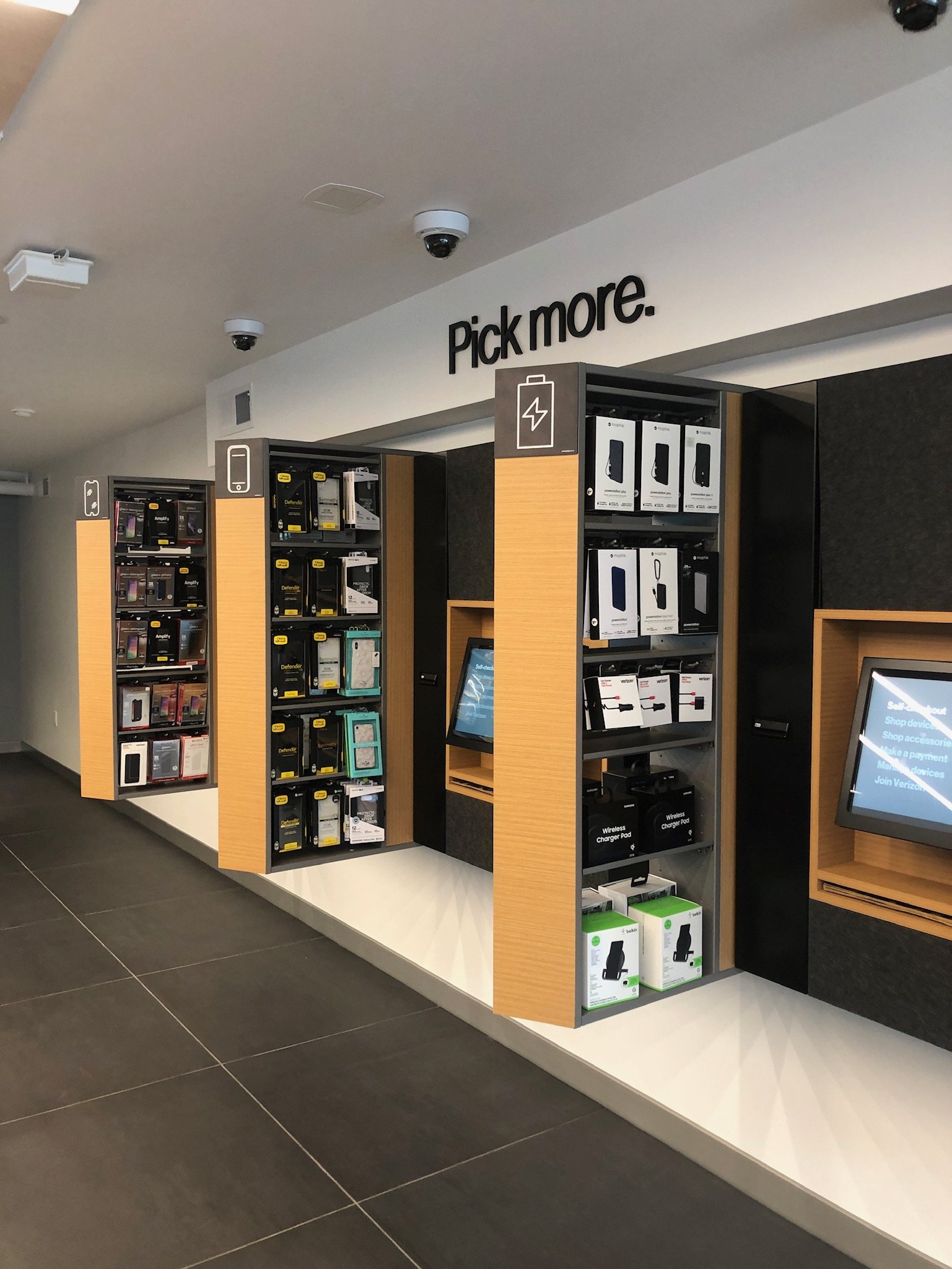
I designed the first self-serve Verizon store: the customer touchpoints, the employee tools, and how they worked together in the space.
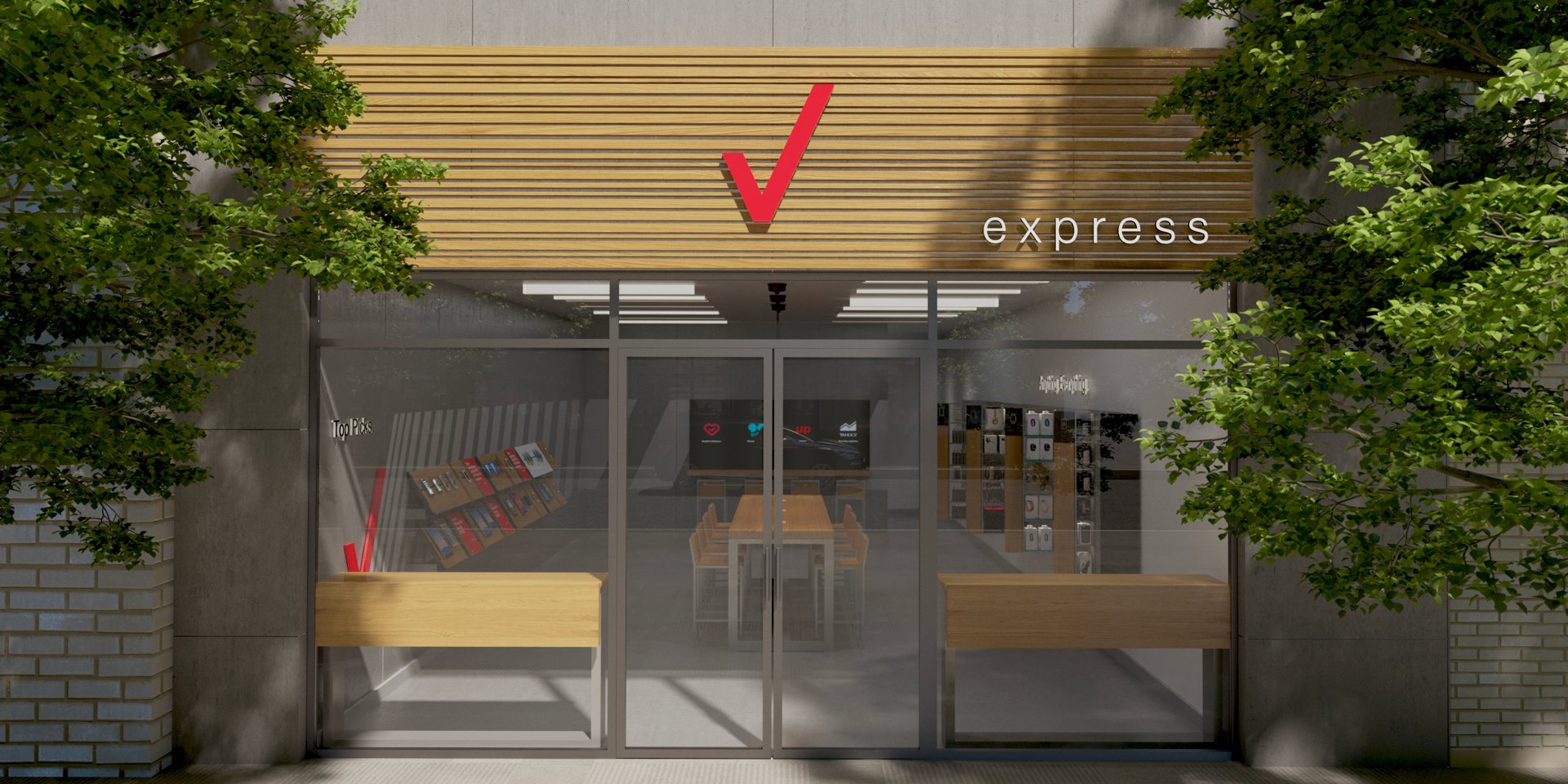
An upgrade used to take 53 minutes.
In a traditional wireless store, every transaction ran through a sales associate. Verizon wanted a smaller store where customers could browse, compare, buy, and upgrade on their own.
Express used self-serve tools to optimize for speed.
Customers handled the transaction themselves. Employees shifted from ringing up sales to keeping orders moving and getting the product into the customer’s hands.
One system, mapped by role.
Customer touchpoints, employee tools, and the physical space were designed together.
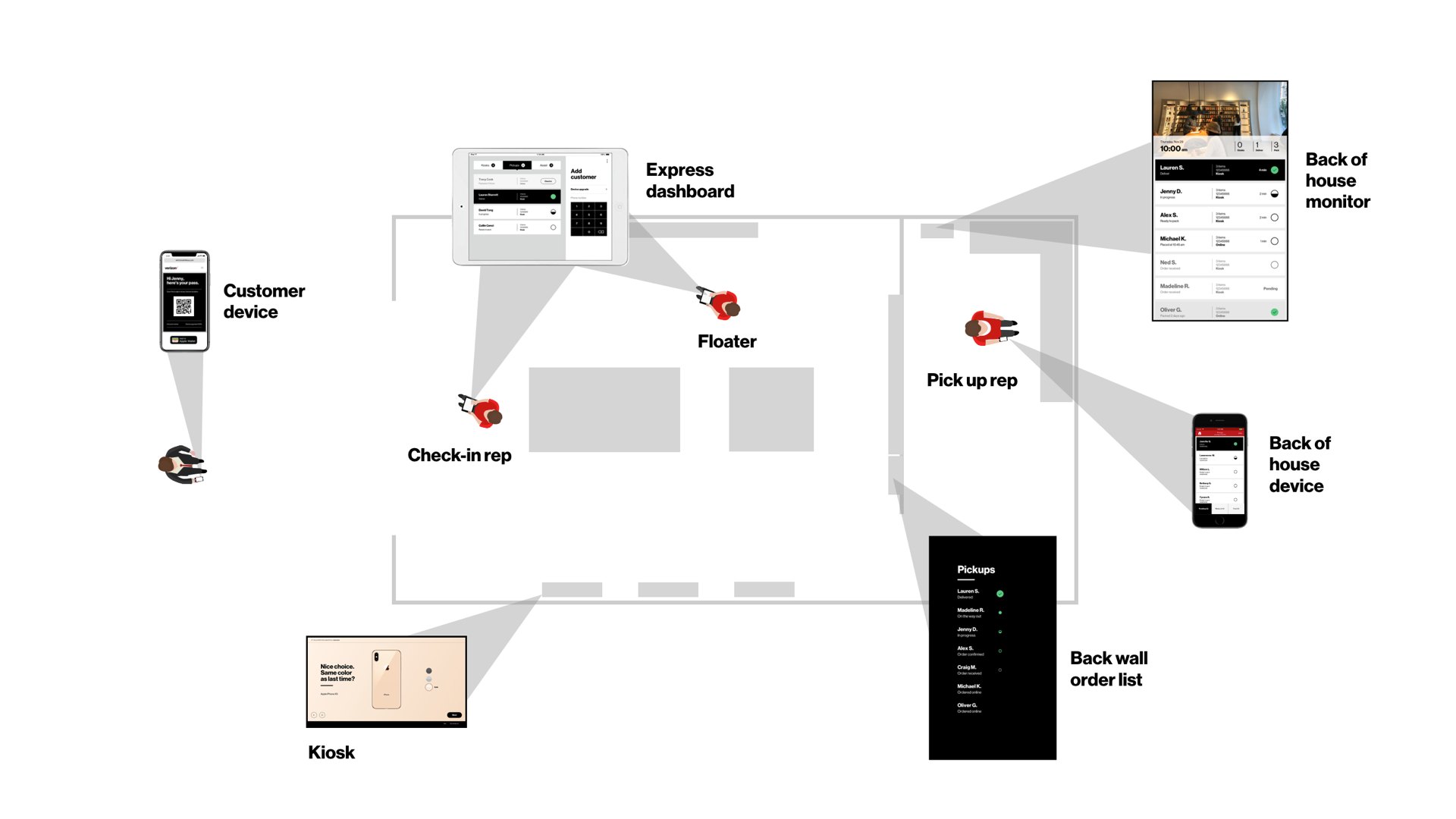
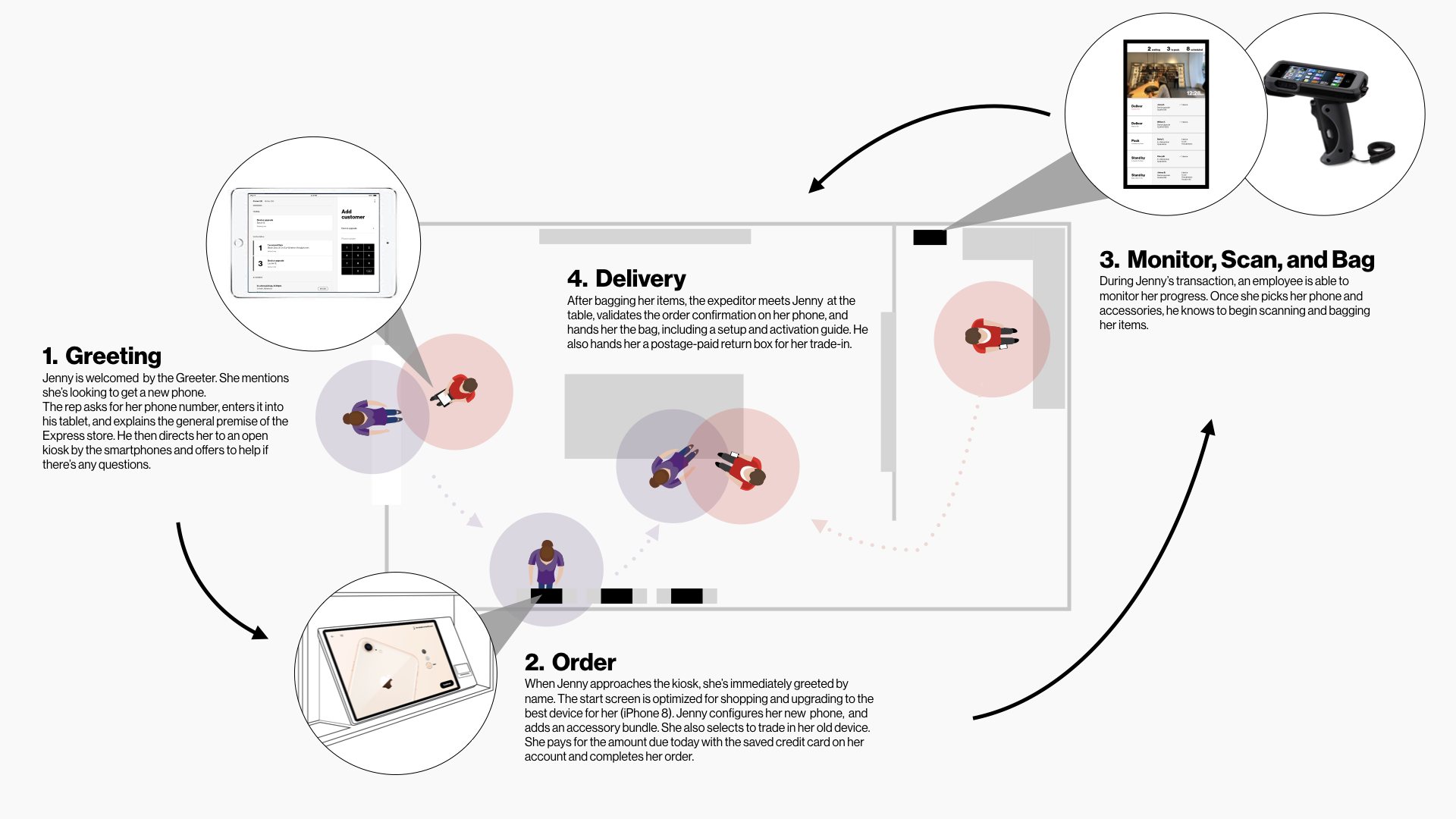
Customers bought and upgraded at the kiosk.
From choosing a phone to adding accessories and paying, then a seat at the table while the order came out.
A 10-minute self-serve upgrade.
Operator tools were connected to the kiosk, so the rep could get ahead on picking and packing before the customer finished the upgrade flow.
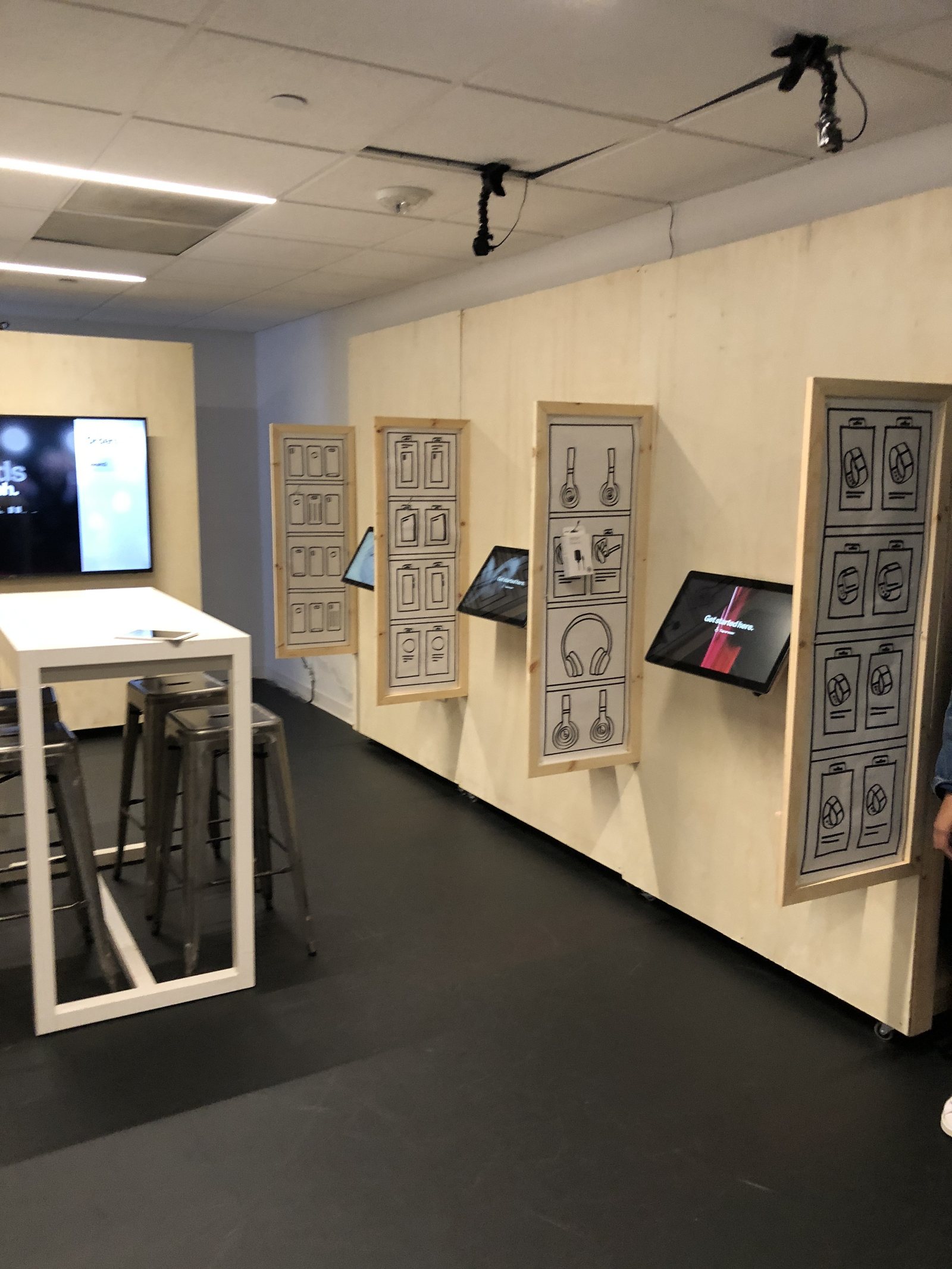
We proved the model in a conference room before building the real store.
A fully working prototype let stakeholders experience the concept firsthand and let us test with real users before the Portland pilot.
Upgrades went from 53 minutes to 7.
Smaller stores, fewer staffing needs, and customers leaving with a product in hand.