Designing a system that enables reuse at scale.
Designing the physical and digital experiences that make reuse easy, engaging, and repeatable.
Traceability created a system of accountability.
A checkout and return system created visibility and enabled us to guide behavior, manage exceptions, and run the program at scale.
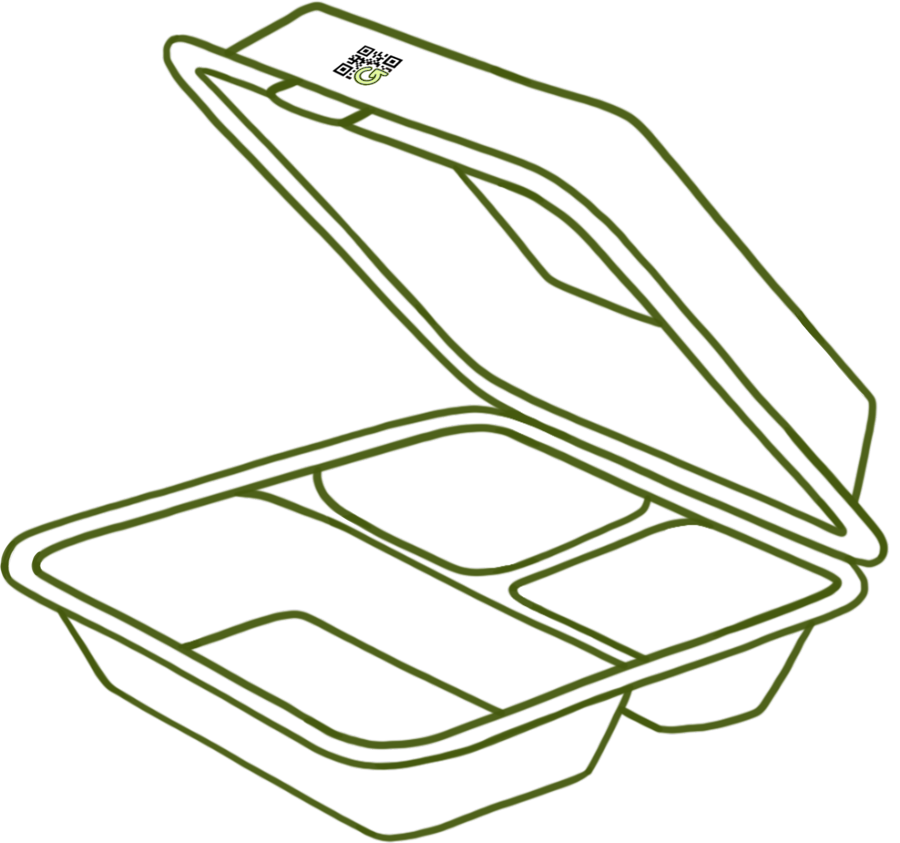 Every container,
every time
Student
Checks out, uses, and returns reusable packaging.
Dining team
Distributes and collects containers.
Program operator
Monitors participation and manages the program.
System
Connects physical containers, RFID, and software.
Intentional touchpoints encouraged desired behaviors.
The return window guided students toward the right behavior while maintaining flexibility for operational mishaps.
- Container checked outSMS
- Container due back
- Late warningSMS
- Grace period beyond the communicated deadlineThe late period actually closed hours after the deadline students were given.
- No charge if the container was receivedAllowed operations to catch up if issues arose.
- Student chargedSMSKept penalties clear and effective.
- Charge could be forgiven if the student returned the containerHelped reward the right behavior.
First-time users got extra grace: softer rules and clearer nudges, since a confusing first return was the biggest reason someone never came back.
We made participation feel simple and rewarding.
Reuse can easily feel like another obligation. We wanted it to feel like something people chose to be part of.
Visible impact changed behavior.
Group Students who tried ReusePass once, then went quiet
A single choice can feel too small to matter. Seeing what their community had done together convinced them it counted.
Program managers needed visibility into their program.
- Container in inventory
- Loop openedContainer scanned out
- Loop closedRFID return
- Wash
- Container returns to shelf
The dashboard turned thousands of individual physical interactions into something operators could understand and act on.
Program
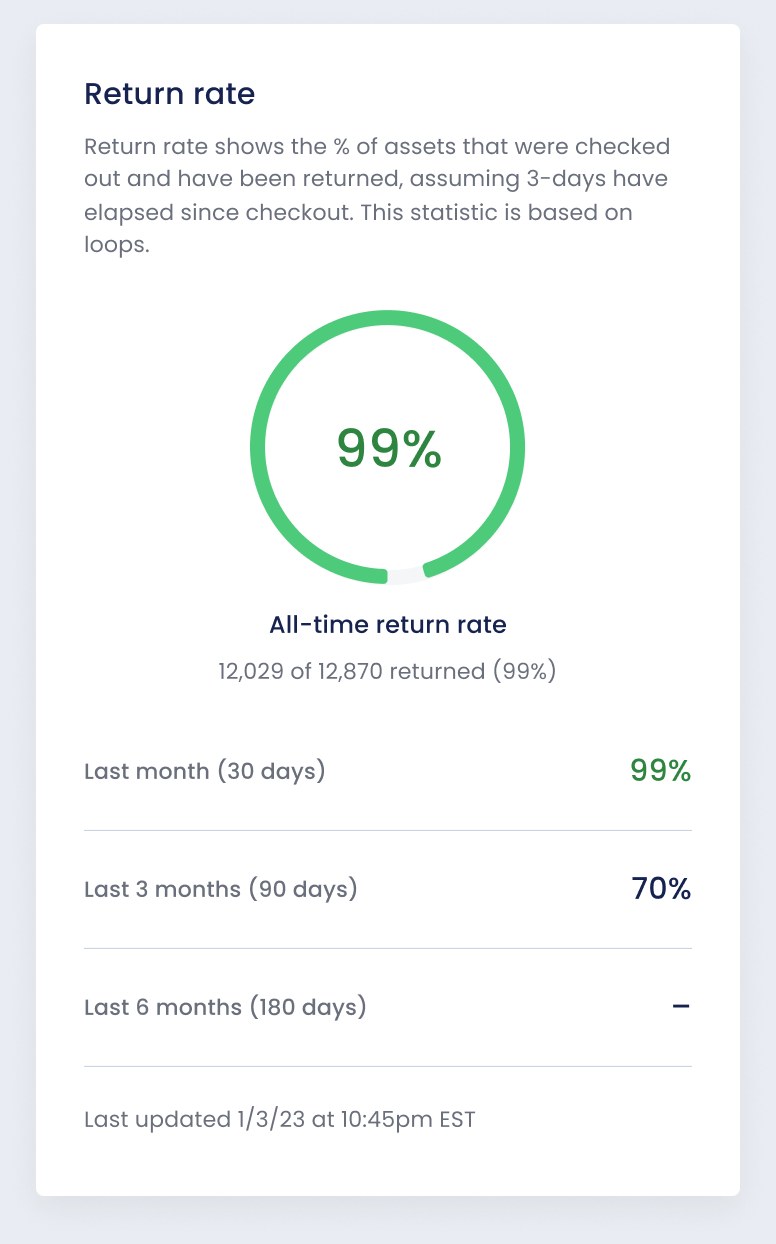
Return rate
Return rate became the hero metric, the number program health was measured against.
Loops
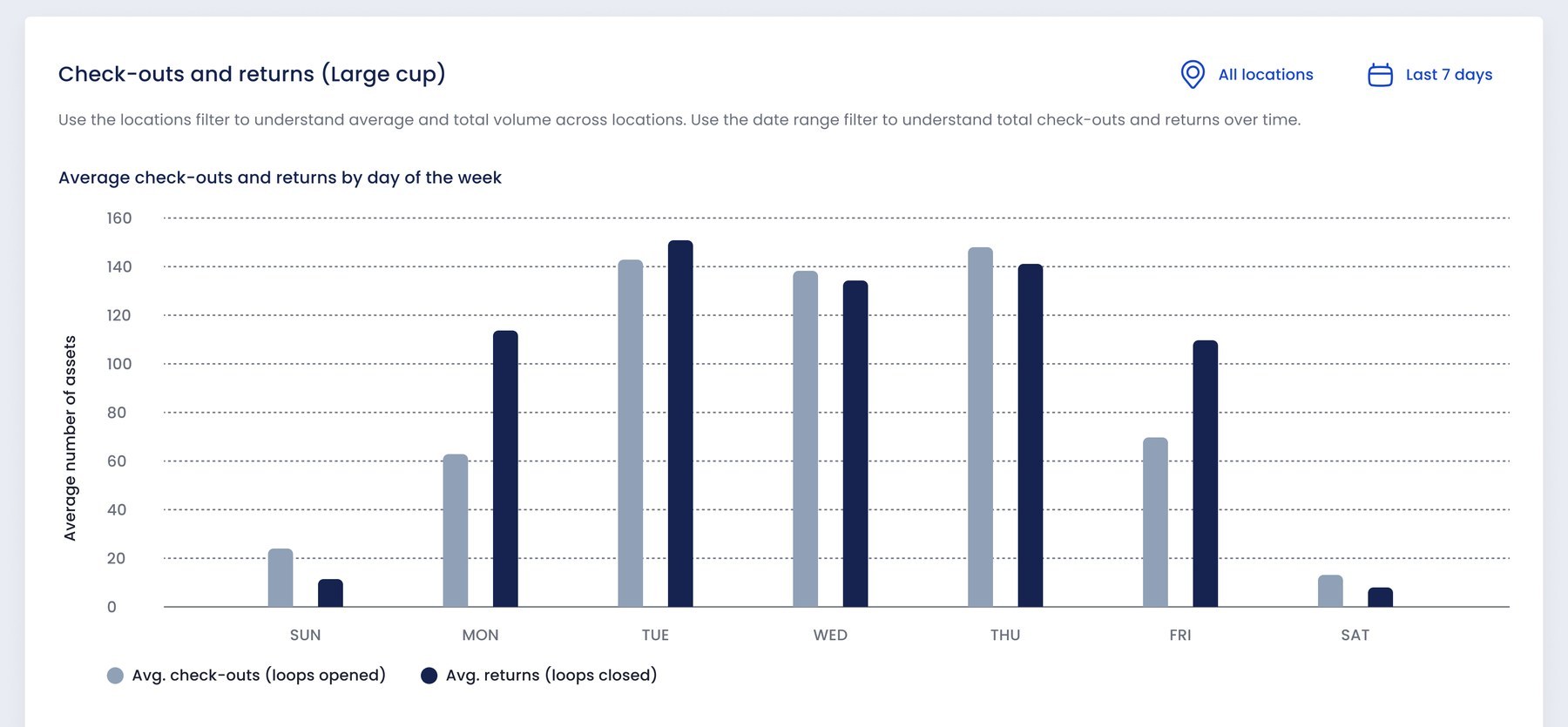
Check-outs and returns
Loops opened and closed by day of the week, filterable by location and date range.
Container
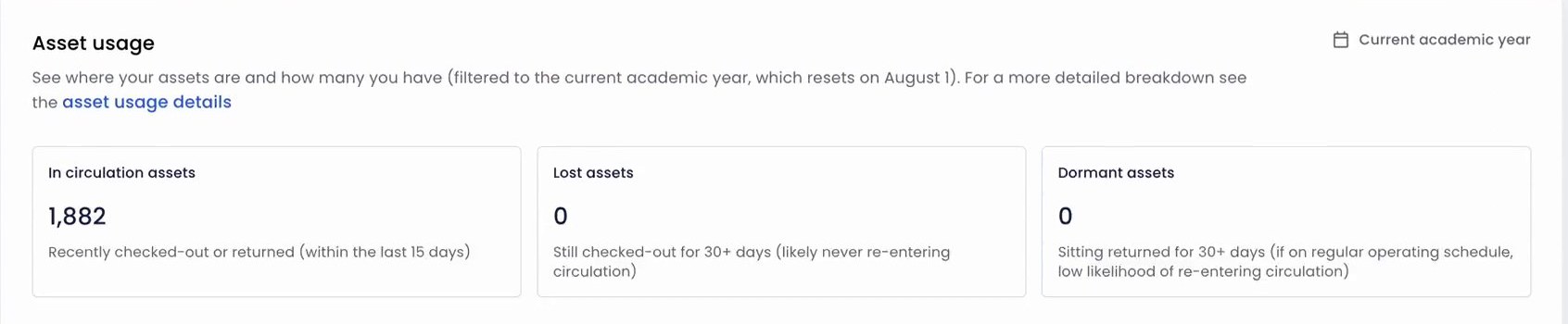
Asset usage
Where every container was: in circulation, lost, or dormant.
Rental
A single rental
Each rental showed its current phase, status, and when the container came back, with every phase of the return window on its timeline.
The goal was to create a system that could scale.
We designed the interactions that encouraged participation, the feedback that made the impact visible, and the tools that gave operators control of the system.