Designing AI That Supports Better Decisions
What designing AI for frontline teams taught me about trust, workflows, and decision-making.
One of the books that has most influenced my career is The Best Interface Is No Interface. Long before AI became mainstream, I was drawn to the idea that the best technology fades into the background, allowing people to focus on their work instead of the tools they use.
Working on AI changed the way I think about design. For the first time, I could see a path toward software that doesn’t ask people to do more—it quietly helps them do less.
Rather than introducing new interfaces, AI has the potential to eliminate them altogether—recognizing food instead of asking operators to label it, adjusting production plans based on historical patterns, or anticipating demand before a chef has to think about it. The goal isn’t to create more interactions with technology; it’s to quietly remove them.
But designing great AI isn’t just about intelligence. It’s about trust.
Trust is earned, not assumed.
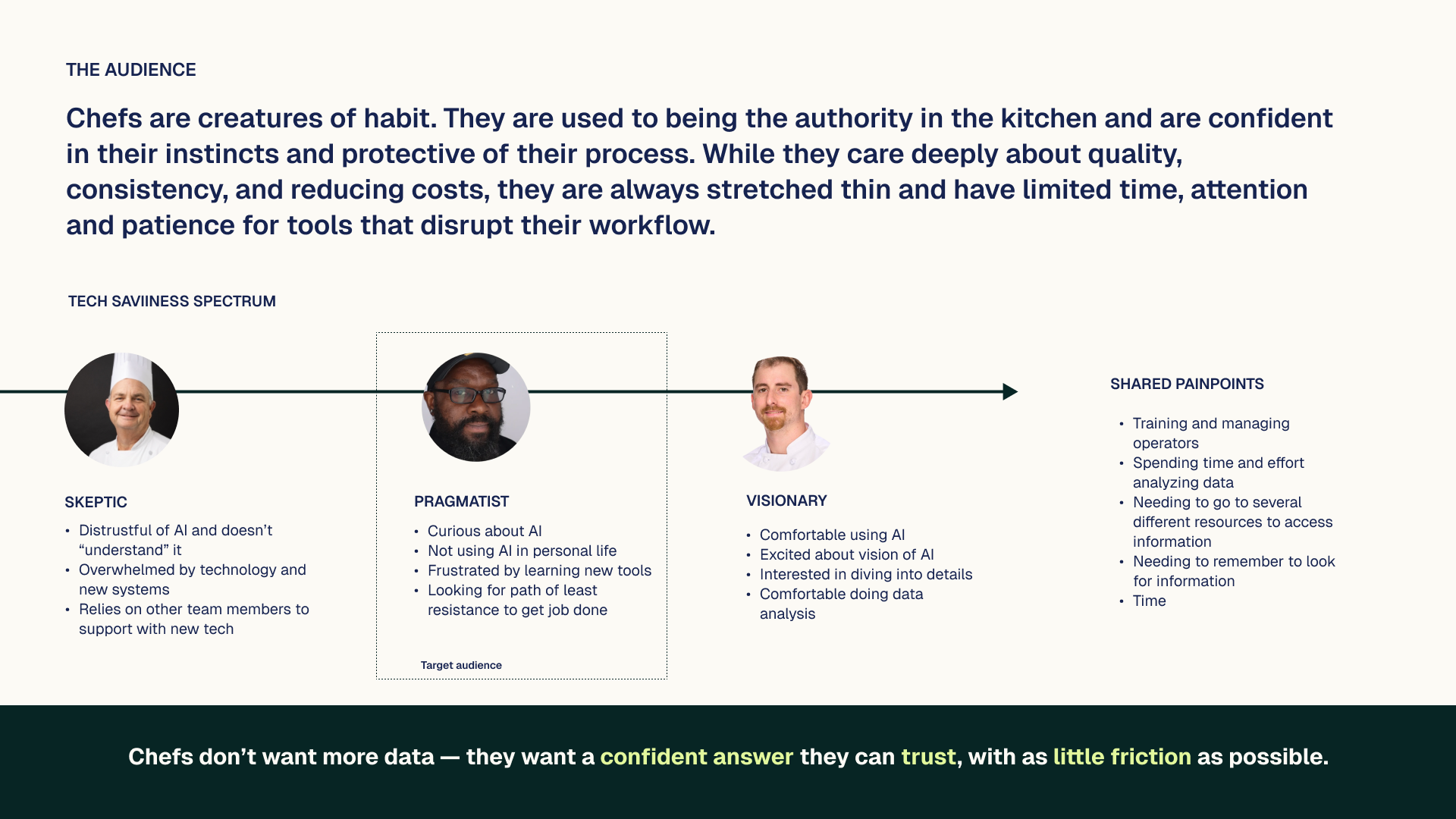
Throughout my work with commercial kitchens, one thing became immediately clear: many chefs were skeptical of AI—not because they resisted technology, but because they already had systems that worked. They worried AI would complicate their jobs or diminish the expertise they’d spent years developing.
That changed the design challenge entirely.
Success wasn’t measured by how advanced the AI was. It was measured by whether people were willing to use it.
Rather than asking chefs to trust AI overnight, we designed an adoption journey that earned confidence over time. Daily emails introduced insights in familiar formats. AI-powered dashboards encouraged deeper exploration. Suggested prompts made conversations with AI feel approachable. Recommendations became more proactive as trust grew.
Each step earned the right to ask users to take the next one.
AI should amplify expertise, not replace it.
The chefs I worked with didn’t need AI to make decisions for them. They needed AI to help them make better decisions, faster.
Our role wasn’t to replace years of operational intuition—it was to eliminate the busywork surrounding it.
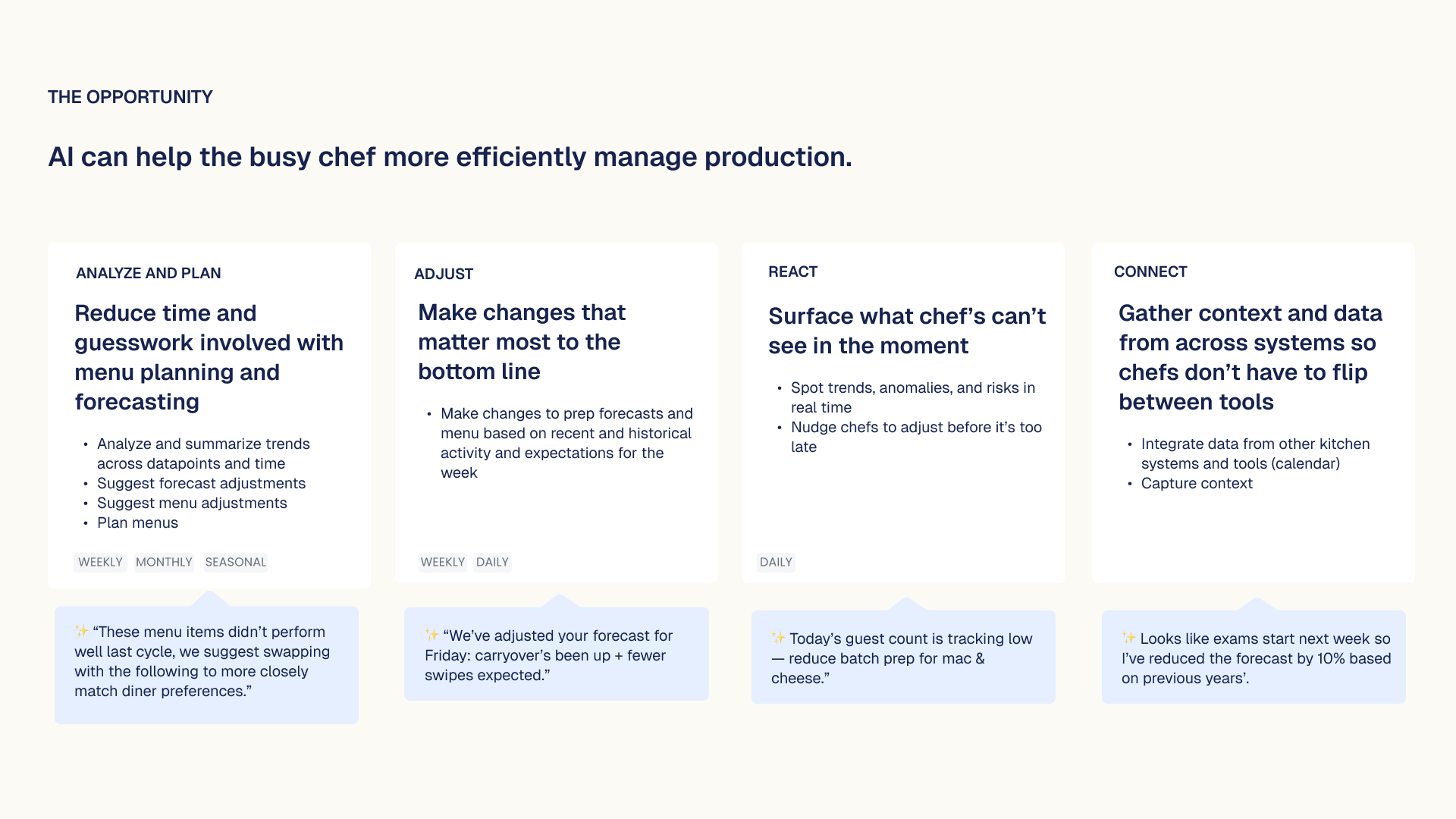
Instead of asking chefs to analyze thousands of production observations, AI surfaced the few opportunities most worth their attention. Instead of expecting them to remember every historical trend, the system carried that context forward automatically. Instead of requiring them to piece together information from multiple tools, AI connected the dots behind the scenes.
The chef remained the decision-maker.
AI became a trusted teammate.
Design beyond the interface.
Building AI products requires more than designing interactions. It requires designing the workflows, decision frameworks, and tooling that make AI useful in the first place.
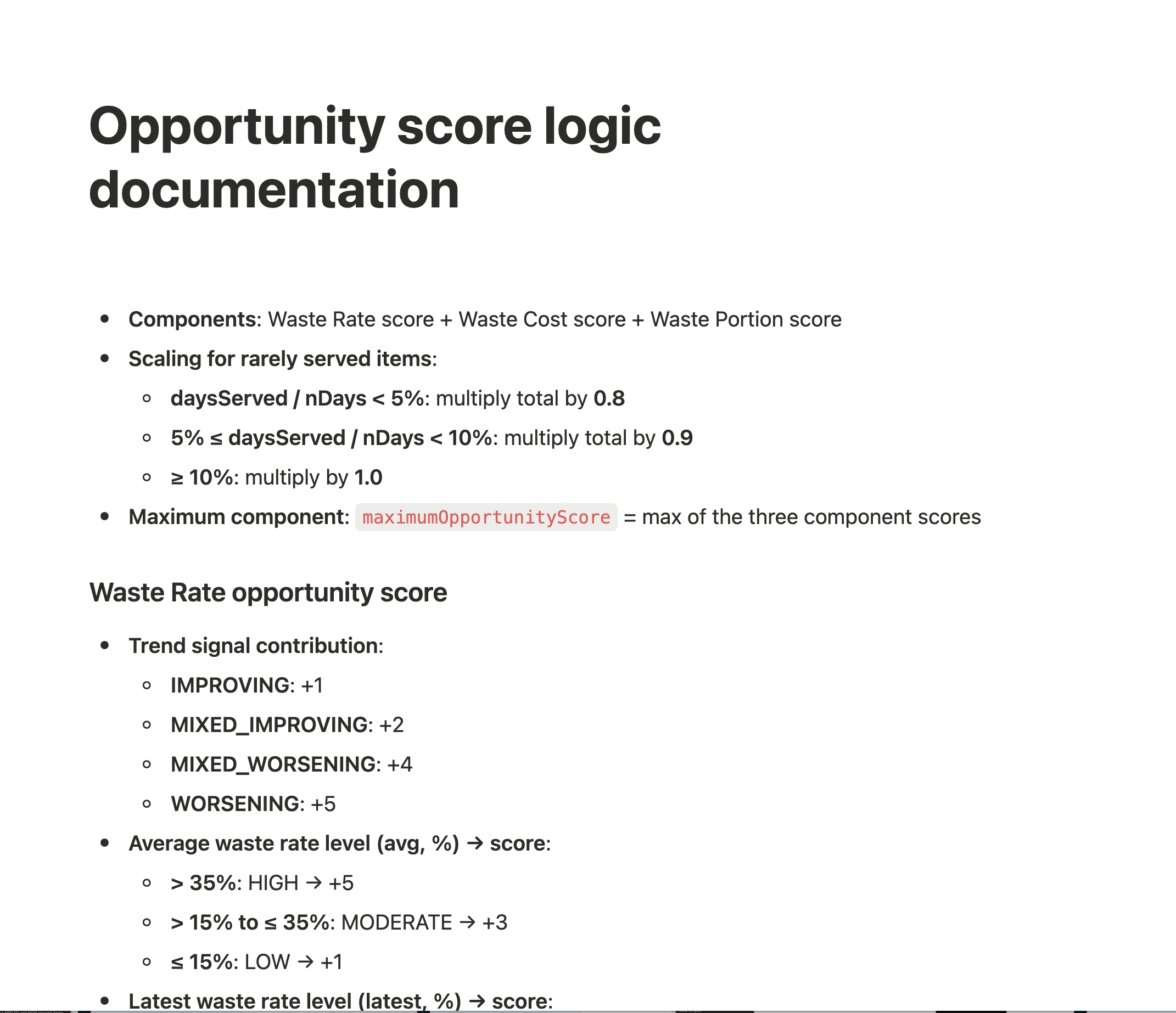
Some of the most important work happened long before anything appeared in the interface. As we began building AI capabilities, I partnered closely with engineering to define the recommendation framework itself. Starting with the decisions we wanted chefs to make, I worked backwards to identify the data signals, business logic, and supporting tools required to generate trustworthy recommendations.
I developed detailed product requirements with example outputs that illustrated not only what recommendations should look like, but why they were being made. Together, we designed the underlying logic that weighed multiple operational signals—including food cost, production variability, historical patterns, and the frequency and magnitude of waste—to surface the five forecast adjustments with the greatest potential impact.
By designing the reasoning behind the recommendations—not just the interface that displayed them—we created a scalable foundation that future AI capabilities could build upon. Alongside that work, I established reusable interaction patterns, AI components, and design guidelines that gave our teams a common language for building AI-powered experiences consistently across products.
Designing AI isn’t just about creating intelligent interfaces—it’s about designing the systems that allow intelligence to scale.
The future of AI is fewer interactions.
For me, AI isn’t exciting because it creates new interfaces.
It’s exciting because it has the potential to remove them.
The best AI quietly handles repetitive work, remembers what people shouldn’t have to remember, connects information that would otherwise stay fragmented, and surfaces opportunities people might never have noticed.
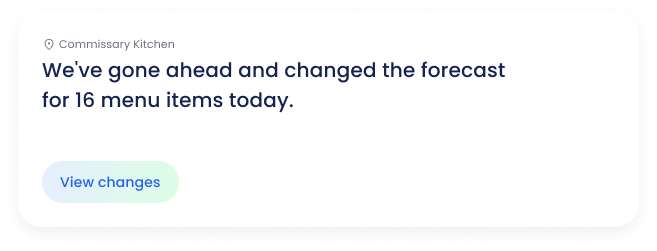
Ultimately, I don’t think the future of design is more interfaces. I think it’s better systems—systems that quietly remove friction, amplify human judgment, and give people more time to focus on the work that matters.